Digital Operations Strategy for Ghanaian Small Businesses

We help Ghanaian SMEs streamline customer management, payments, and daily operations.

Get a practical digital operating model built for how your business runs today, with a clear roadmap as your workflows grow.

  • Capture more customers across your key channels
  • Simplify payment and reconciliation workflows
  • Give your team a clear, repeatable operating system

Vista Digital Fit Model™

Find your best-fit architecture path.

Start with diagnosis, not guesswork.

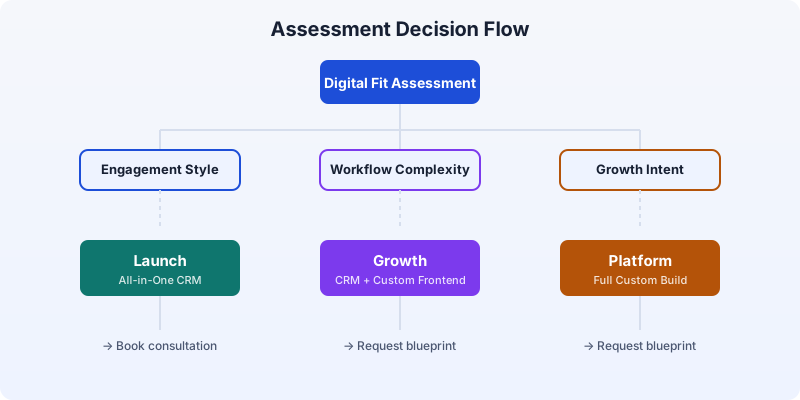
This guided assessment surfaces your likely architecture path, explains why it fits, and gives you the right next move for blueprinting or live consultation.

  • Guided assessment questions
  • Structured recommendation
  • Clear handoff into the right next step
Assessment decision flow: engagement style, complexity, and growth intent lead to Launch, Growth, or Platform

What We Deliver First: Service Capabilities

Our offer is capability-led. Vendor choices are implementation layers, not the strategy itself.

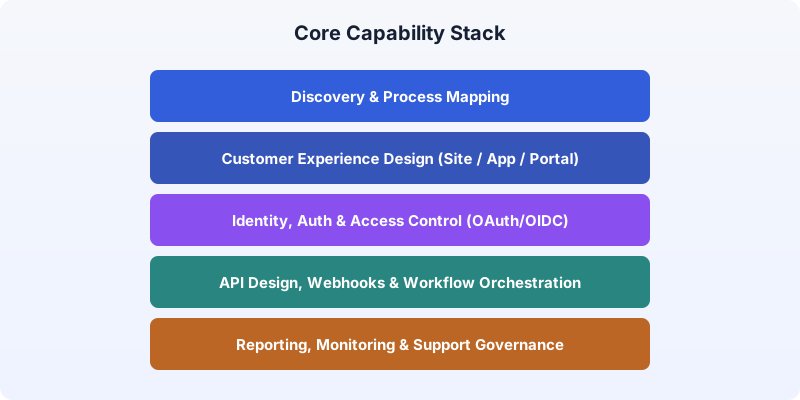
Core Capability Stack

  • Discovery, process mapping, and architecture fit
  • Customer experience design (site, app, or portal)
  • Identity, OAuth-based authentication, and access control
  • API design, webhooks, and workflow orchestration
  • Reporting, monitoring, and support governance
Standards We Use

  • Auth: OAuth2/OIDC and role-based access
  • API: REST contracts, versioning, and idempotent handlers
  • Integrations: Payments, CRM, Slack, ServiceNow, WhatsApp
  • Operations: observability, change control, and SLA-based support
Core capability stack: discovery, experience design, identity, API, and operations layers

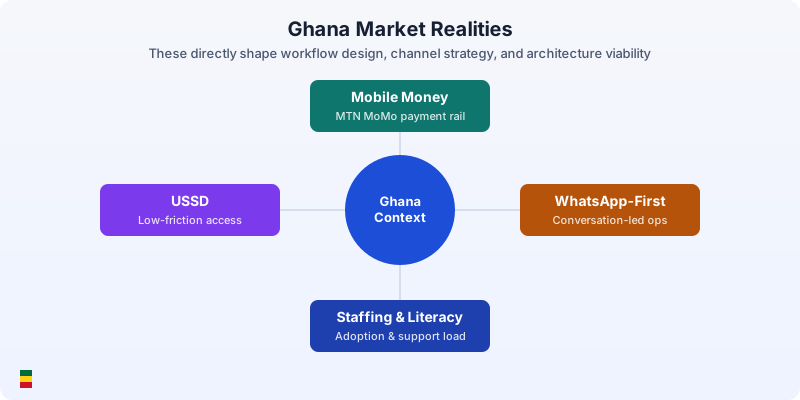
Why Ghana Market Realities Matter in Architecture Decisions

Operating Realities

These are not side notes. They directly shape workflow design, channel strategy, support ownership, and which architecture path is actually viable.

Select a reality to see how it changes the architecture conversation.

Our Decision Approach

  • Capability scope first, vendor stack second.
  • Tier selection based on workflow complexity and growth intent.
  • Integrations designed around real channels (payments, WhatsApp, Slack, ServiceNow).
  • Governance via OAuth, API standards, and support ownership clarity.
Ghana market realities: Mobile Money, USSD, WhatsApp, Staffing

The 3 Architecture Options

Option 1 · Speed

All-in-One CRM (Launch)

Configure Zoho One or Odoo to run core operations quickly and affordably.

  • Fastest setup (days to 2 weeks)
  • Lowest upfront cost
  • Best for simple workflows

Option 2 · Balance

CRM + Custom Frontend (Growth)

Combine CRM structure with a branded customer-facing website/app.

  • Most common and recommended path
  • Moderate automation and integrations
  • Strong value-to-cost ratio

Option 3 · Power

Full Custom Platform (Platform)

Build fully tailored workflows and data systems with long-term flexibility.

  • Highest capability and differentiation
  • Scalable architecture for complexity
  • Highest upfront investment

Vendor Toolkit Examples (Applied After Capability Design)

Salesforce Path

Salesforce + Experience Cloud

Strong for formal CRM/service operations with portal and case workflows.

  • Experience Cloud for partner/customer portal
  • Sales/Service Cloud workflow backbone
  • Slack + ServiceNow integration options

Zoho Path

Zoho CRM + Custom Frontend

Great for SMEs that need structure fast with moderate customization.

  • Zoho CRM/Zoho One for business operations
  • Custom branded web layer
  • Payments + messaging + automation workflows

Custom Path

Vercel + Supabase + Next.js

Best for differentiated workflows and long-term platform ownership.

  • Custom data model and business logic
  • API-first integrations with OAuth support
  • Scalable frontend/backend architecture

Trade-Off Comparison

How the options compare across speed, cost, flexibility, and support
Option Timeline Upfront Cost Customization Support Responsibility
Launch (All-in-One CRM) 1–2 weeks Low Limited Low (vendor-managed)
Growth (CRM + Frontend) 2–6 weeks Medium Moderate Moderate (integration monitoring)
Platform (Full Custom) 6–16+ weeks High Full High (full ownership)

Key Decision Logic

We map every business to the right architecture based on measurable factors.

Decision Inputs

  • Complexity: simple or multi-step workflows
  • Growth Intent: stable operations or scaling goals
  • Budget: upfront affordability vs long-term flexibility
  • Differentiation: standard capability vs competitive edge

Strategic Position

  • Default: Growth package (Tier 2)
  • Upsell: Platform package (Tier 3) when justified
  • Fallback: Launch package (Tier 1) for low-budget clients

Tiers of Services

Tier 1 — Launch Package

All-in-One CRM

  • CRM setup and basic workflows
  • Simple branded website
  • Payment integration
  • Team onboarding

Tier 3 — Platform Package

Full Custom Platform

  • Custom backend + frontend architecture
  • Tailored workflows and data model
  • Advanced dashboards and controls
  • High scalability and ownership

Pricing Matrix + Effort Model

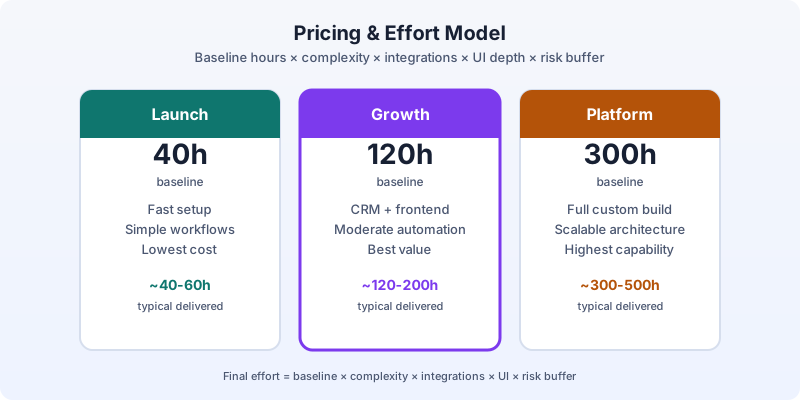
We quote using a repeatable system: baseline tier, modules, complexity multipliers, and risk buffer.

Tier Baseline Ranges

Starting effort baselines before scenario multipliers are applied.

  • Tier 1: 20–60 hrs
  • Tier 2: 60–180 hrs
  • Tier 3: 180–500+ hrs

Effort Multipliers

  • Workflow complexity (includes operational scale): x1.0 to x2.0
  • Integrations: x1.0 to x1.7
  • UI depth: x1.0 to x1.6
  • Risk buffer: x1.0 to x1.3

Quote Formula

Total Estimate = (Tier Baseline) × (Complexity × Integrations × UI Depth) × Risk Buffer

This model compounds effort drivers. As complexity and integrations increase together, effort can rise faster than linearly.

1.0 = straightforward workflows, 2.0 = highly complex operations or large team scale. 1.0 = no external systems, 1.7 = multiple connected tools and channels. 1.0 = basic interface, 1.6 = advanced custom experience. 1.0 = low uncertainty, 1.3 = high uncertainty and delivery risk.

This transforms quoting from guesswork into a defendable, scalable pricing engine with predictable margins.

Investment figures are confirmed after discovery

GHS is our primary planning currency, with a USD equivalent available when useful. We are not publishing unapproved figures yet. The calculator shows effort, while the final scope conversation confirms professional fees, vendor subscriptions, and third-party costs separately.

Pricing example: three service tiers with effort multipliers

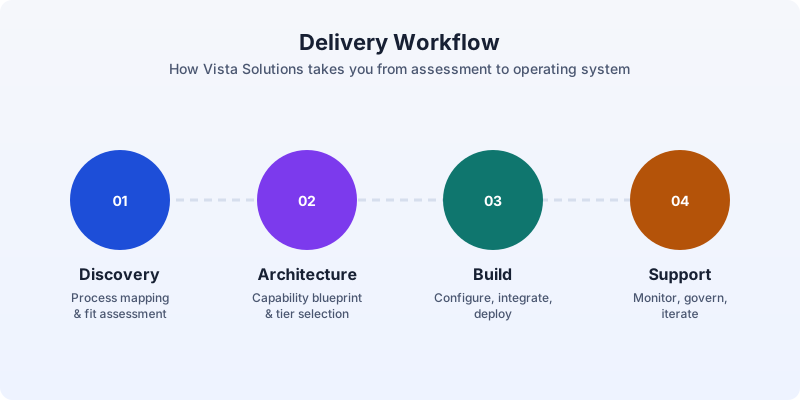
How a Vista Engagement Works

The first step is a focused working session intended to produce useful artifacts you can keep and review internally.

The practice behind the work

Architecture guidance grounded in business reality

Neils Haldane-Lutterodt is the founder of Vista Solutions and an Architect with more than 10 years of experience in architecture roles.

The practice helps Ghanaian SMEs make clearer decisions about customer operations, payments, workflows, integrations, and the systems their teams can realistically adopt and support.

Based in Ghana · Capability-led · Vendor-neutral before the architecture decision

Practical Problems We Can Work Through

These are representative use cases, not claimed client case studies. They show the kind of operating problem the engagement is designed to make clearer.

Practical use case

WhatsApp-led customer operations

Leads, follow-up, and customer status live across individual chats.

  • Map handoffs and ownership
  • Define a shared operating record
  • Assess CRM and messaging options

Practical use case

MoMo payment reconciliation

Payments, fulfillment, and finance updates happen in separate places.

  • Clarify payment states
  • Design exception handling
  • Connect reporting to confirmed events

Practical use case

Multi-step workflow visibility

Teams coordinate approvals, delivery, or support through mixed tools.

  • Map decisions and bottlenecks
  • Compare architecture paths
  • Match ambition to adoption capacity